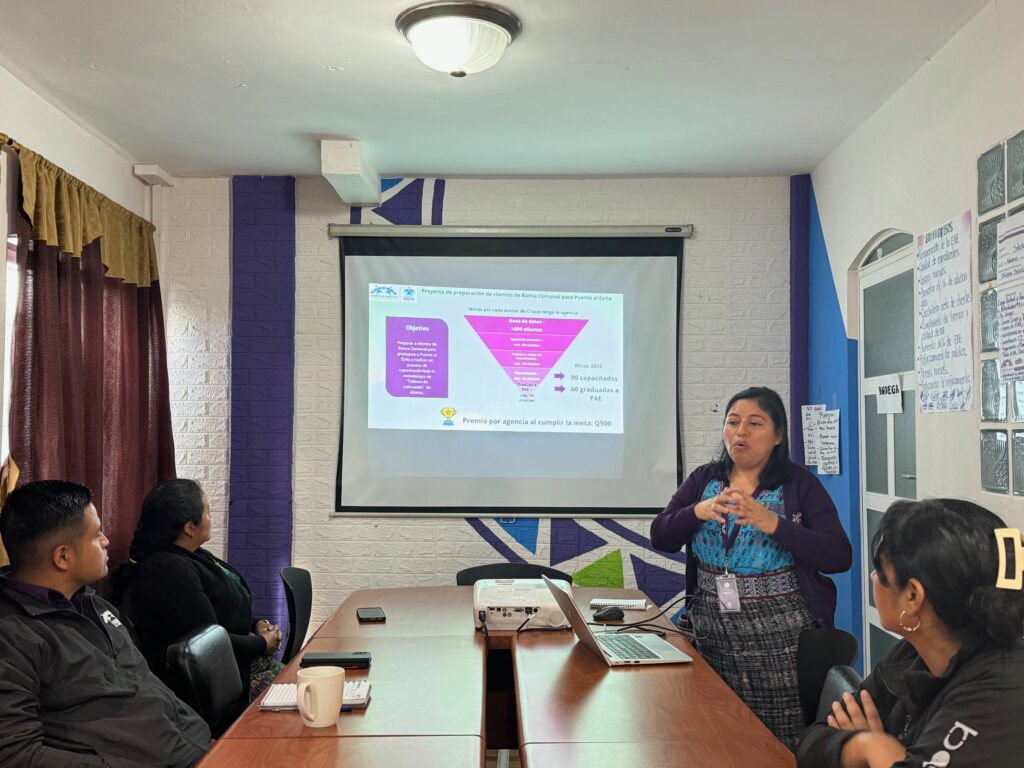
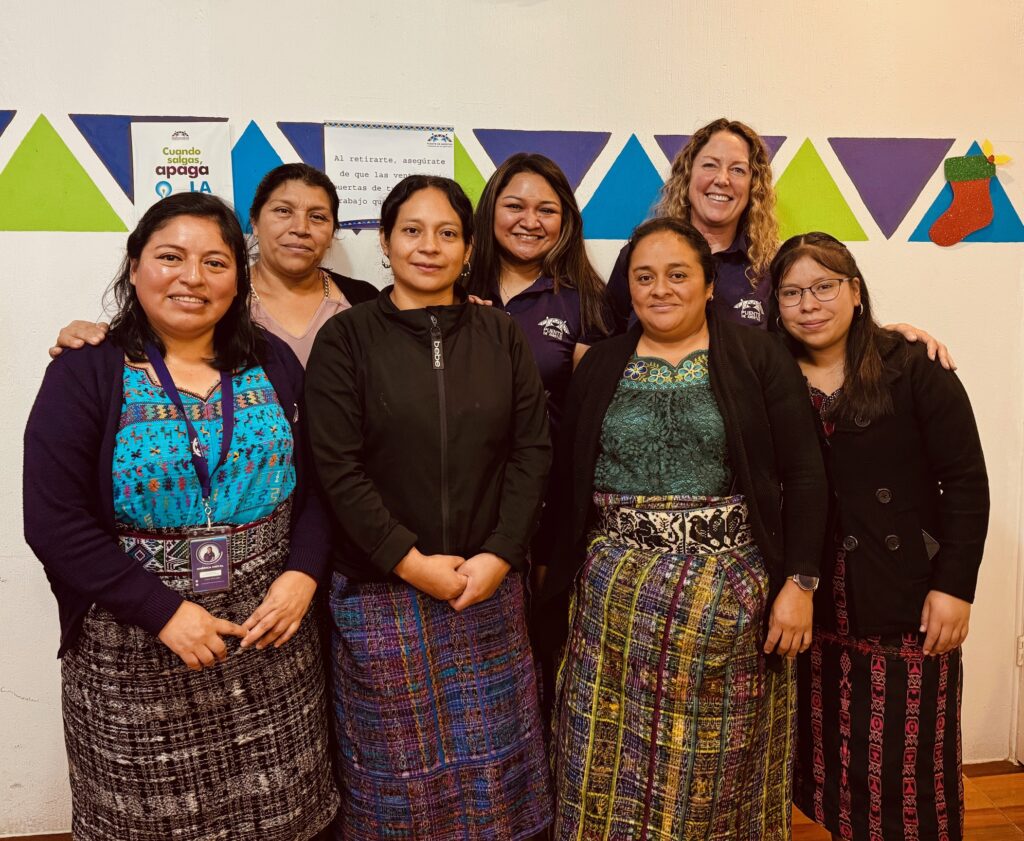
In mid-October 2024, President & CEO Tracie Cordeiro visited three Friendship Bridge branch offices located in Quiché, Nebaj, and Sololá. Read on to learn more about her firsthand experiences seeing how our health, agricultural, and educational programs—including advanced training to prepare new Bridge to Success clients—are being implemented on the ground.
Can you tell us more about Friendship Bridge’s branch offices and what you hoped to accomplish during these visits?
TC: Our Guatemalan branch offices are key in localizing clients’ needs, so with these visits, I hoped to get a better understanding of the challenges and opportunities that exist at the regional level. I also knew it would be a great opportunity to meet our resilient clients face to face and connect with our dedicated staff and partners who work in the field.
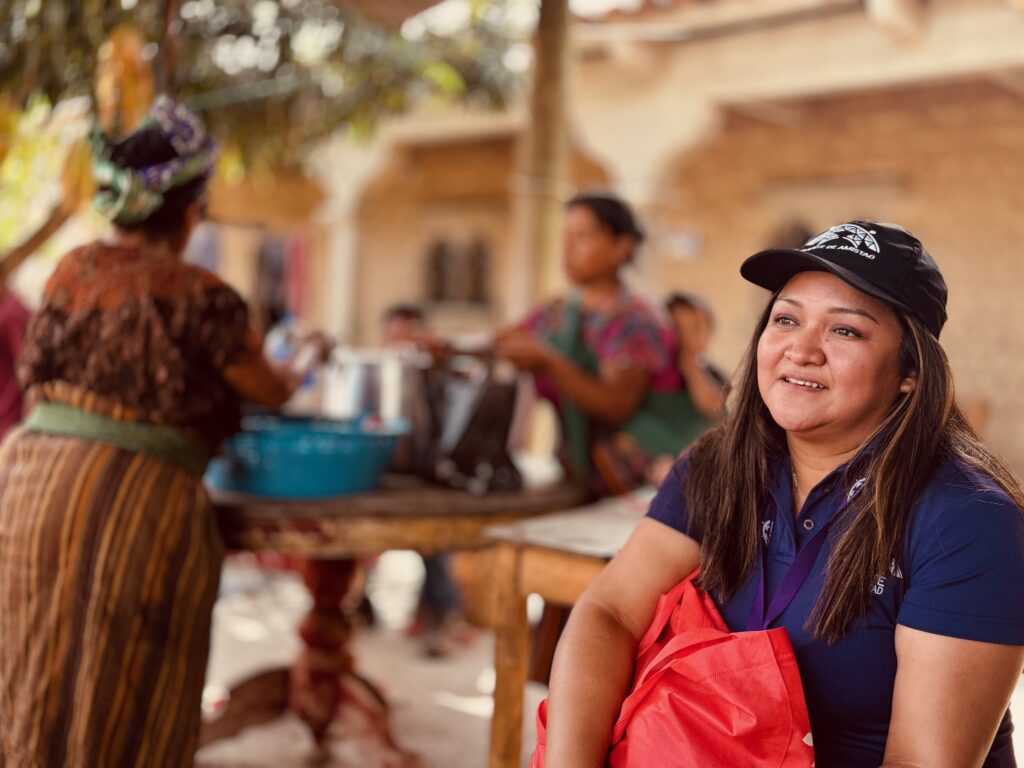
In addition to our headquarters in Panajachel and our central office in Guatemala City, Friendship Bridge has 13 branch offices located throughout the country, making our services more accessible to Indigenous women living in rural areas. It also allows us to grow potential markets by better understanding the local culture and development in that region.
Thanks to my travel companion Stefani De Paz—our Program Manager who oversees all of Friendship Bridge’s health, agricultural, education, and training initiatives in Guatemala—I had a full itinerary and an informative, productive trip! I was able to witness our mobile health clinic in action, see our agriculture technicians working in the field, and support clients as they learned to use a new advanced training platform designed to help them grow their businesses. During our trip, which covered more than 300 miles and 13 hours of driving on roads in rural Guatemala, I also had the privilege of hearing many inspirational stories from our staff and the women we serve. Friendship Bridge has remained committed to opening one new branch per year in areas where our services are most needed.
What did you learn during your first stop?
TC: Our first stop was the Quiché branch office, which serves 2,200 clients and oversees a portfolio of $1.4 million. The positive energy there was so inspiring! Maria de los Ángeles, the Branch Leader, greeted us, then made introductions to her team, who all shared beautiful, heartfelt stories about their work experiences. Hearing about the length of tenure of many Friendship Bridge staff always amazes me. It is a true testament to the empowering work culture we create together, particularly for women.
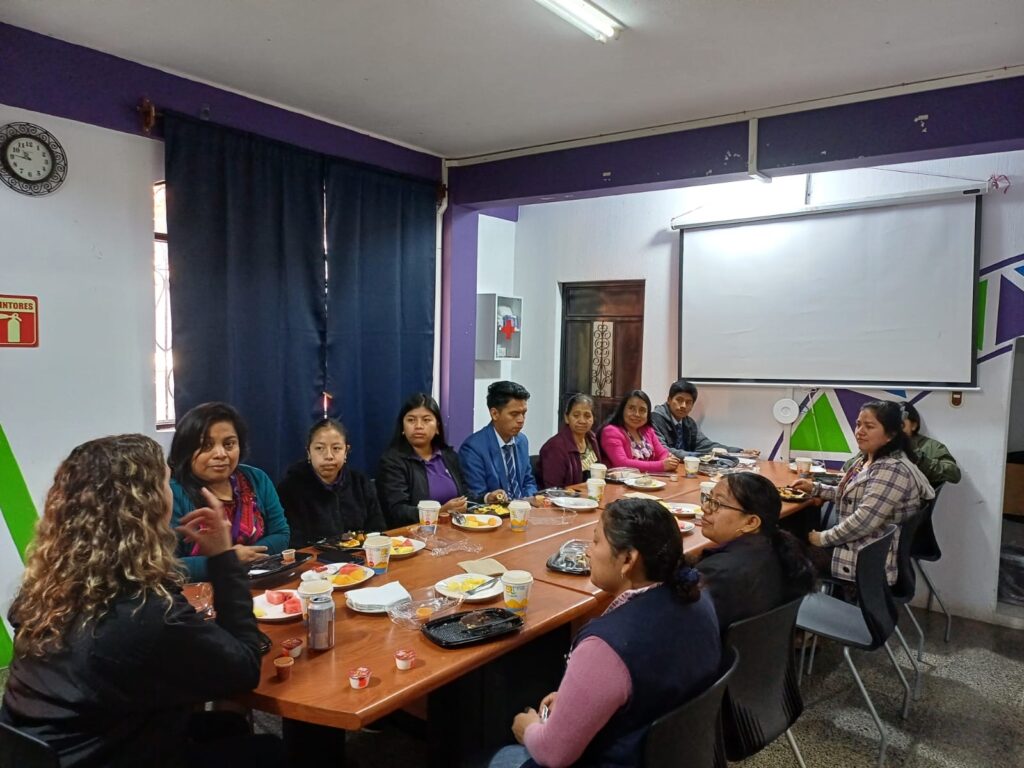
After visiting the office, Marielos took us to meet a cohort of six women who participate in one of our microcredit Trust Banks—what we call Dreamers, women living in poverty who start businesses out of necessity. When we arrived, they were weaving corn husks to make sombreros as they waited. It was so impactful to see that they do not leave much idle time, that they are always working! On that particular day they had gathered to meet with us and visit our mobile health clinic provided by our partner, Maya Health Alliance, which offers services at eight of our 13 branches.
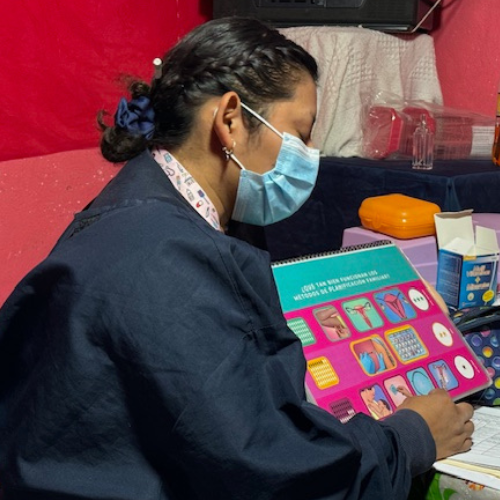
Dominga, the nurse on duty, gave three of our clients overall health checks, including monitoring vitals, taking blood samples, and screening for diabetes. During the exams, she also demonstrated how to perform a proper breast exam, and I have to say, I learned something too! She reminded us to do the exams at the same time each month—five days after our period ends. Then she discussed options for maintaining gynecological health, like scheduling pap and HPV exams.
What stood out for you about this visit and our approach to providing health services?
TC: I was impressed by how professional and thorough Nurse Dominga was while reviewing all the relevant areas of preventive health care, while ensuring our clients felt at ease and welcomed the whole time. It was amazing to watch her go through everything in a very consistent, simple way, so our clients could easily understand and not be threatened by medical terms. For example, she used laminated charts with visual graphics as informational aids during each exam. These charts are essential for many of our clients who are illiterate: they helped her explain everything from how to perform a breast cancer self examination to what a healthy cervix should look like.
By going into the field, it is very motivating to just see the work that we do and the impact that we have, but it also allowed me to be a bit more reflective and be a critical thinker. For example, only half of our clients there that day took advantage of visiting the mobile health clinic. And for one of the three women who did, it was the first time she had ever had a health exam in her life, even though she was eligible for this program long before. This experience allowed me to better understand what the barriers are and how to lower them in the future.
I wondered why only three out of the six women participated in the exam, even though it is completely free of charge and much more accessible than other medical clinics. Many other organizations do not provide this service, so it made me reflect on how we can better communicate the benefits. How can we make it clear to the clients that this is a value-add to their loan that will support their quality of life and their capacity to run their businesses?
Where was your next stop?
TC: After Quiché, we traveled northwest to our branch office in Nebaj, which serves 3,400 clients and oversees a portfolio of $2.1 million. This is where our Women’s Agriculture Credit & Training program is located. Agriculture is one of the most important sectors in Guatemala and accounts for 25% of the clients we serve, so this is a major initiative for Friendship Bridge.
In Guatemala, it is usually the men who cultivate crops, at least historically. Yet that is changing somewhat due to extreme poverty here, particularly in rural areas like Nebaj, where many of our clients’ husbands and sons have had to make the extremely difficult decision to migrate north and leave their families behind. This is why Friendship Bridge identified Nebaj as a key area to implement our agricultural program, which provides technical assistance and small loans to support women farmers. This program is helping to deter migration and reunite families by giving them a viable solution to generate income, and now we serve nearly 800 clients in this region.
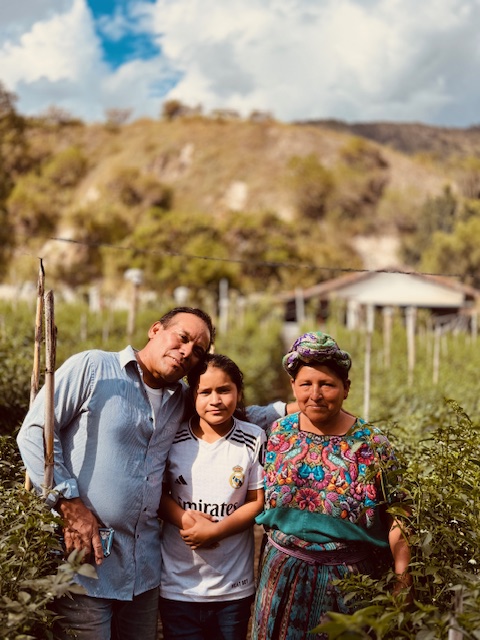
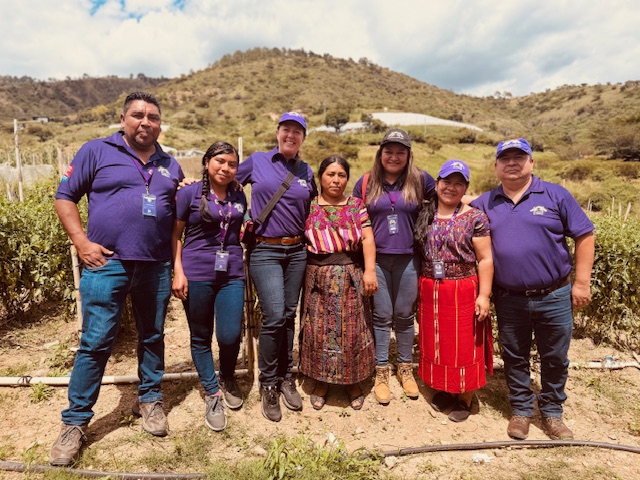
We joined Candelaria at one of Friendship Bridge’s demonstration plots, which are located in various communities throughout the region. These learning sites provide places where our agricultural technicians can teach clients innovative low-cost methodologies to improve crops.
During our visit, Candelaria demonstrated her drip irrigation system, installed with the help of one of our agricultural technicians. She explained that this new system replaced her older, inefficient sprinklers and improved water usage. She spoke in her native Kʼicheʼ language the whole time and exuded such pride in her work. It was nice to see how empowered she felt! We also met with another client who learned how to measure the alkalinity of her water supply, essential for increasing fertilizer absorption and improving crop yield.
What did you learn from our agricultural technicians, and are there any plans for program expansion?
TC: One technician talked about the need for a soil measuring tool that would help them better determine what additional nutrients are needed for the introduction of new crops. I think we will consider that option as we look at our upcoming Strategic Plan. We have also been raising the idea of expanding our loan options for additional crops, such as cardamom or coffee.
Another reason our Women’s Agriculture Credit & Training program is an important initiative for Friendship Bridge is because it also works to mitigate the risk of environmental impacts to this industry. We are currently in the process of defining our environmental strategy for the next Strategic Plan, and providing the most effective training for sustainable agricultural practices will continue to play a huge role.
What did you learn at Friendship Bridge’s Sololá Branch Office?
TC: On the last stop on our trip, our main focus was to see the positive results of a new pilot project in action. The Sololá branch office serves 2,300 clients and has a portfolio of $1.4 million.
Our ongoing partnership with a company called Alterna has given us access to an innovative online learning platform. Now we are using this application to develop our Trust Bank clients’ business management skills and launch them into our Bridge to Success program. One of the things that sets Friendship Bridge apart is our commitment to education at every stage, and this partnership will allow us to help even more clients increase their skills for future business growth.
Right now we have an initial cohort of 32 women, and we hope to reach a total of 50 clients very soon. During the visit, we met with some of the participants and watched a demonstration where they learned how to navigate eight different modules, covering how to build business development skills.
In fact, Alterna recently named Friendship Bridge as “best in class” for implementing this program compared to other organizations doing similar projects. They have also invited America Raquel, our advanced training coordinator, to Costa Rica to receive an award recognizing her incredible contribution to this program. America will share her story and explain how she has been successful completing these training sessions with our clients. We are so proud of her and all the women who participated.